Nobody Warned Me I'd Mourn My Old Life After a Celiac Diagnosis
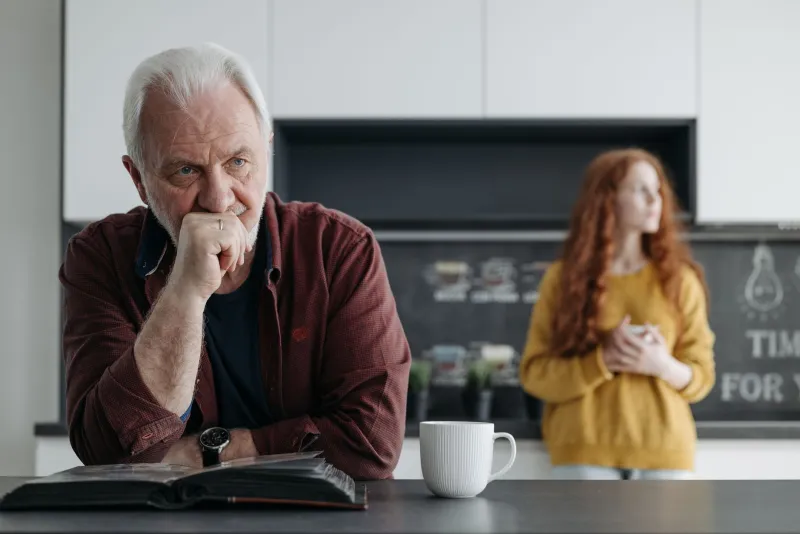
There's a version of the celiac diagnosis story that gets told pretty often. You finally have an answer. The years of confusion, the mystery symptoms, the doctors who shrugged — all of it suddenly makes sense. You're supposed to feel relieved. And maybe you do, for a little while.
But then the grocery store becomes an obstacle course. A birthday dinner turns into a negotiation. You watch your friends order off the menu without a second thought, and something quiet and heavy settles in your chest. Nobody told you this part would feel like loss.
And yet, for so many people with celiac disease, that's exactly what it feels like.
It's Not Just About the Food
Let's be honest about what food actually means in American life. It's Friday night pizza with your college friends. It's your grandmother's stuffed shells at every holiday. It's grabbing a pretzel at a baseball game or splitting a plate of biscuits at brunch without thinking twice. Food is woven into belonging, celebration, comfort, and memory in ways that run much deeper than nutrition.
When celiac disease enters the picture, all of that gets complicated in an instant. You're not just changing your diet — you're renegotiating your relationship with nearly every social ritual that involves eating, which is to say, nearly every social ritual, period.
The grief that follows isn't dramatic or obvious. It tends to creep in sideways. You might feel it when you have to call ahead to a restaurant before a first date. Or when you're standing at a wedding reception scanning a buffet table that has nothing safe for you. Or when you realize you've started dreading invitations instead of looking forward to them.
That feeling has a name. It's grief. And it deserves to be taken seriously.
The Five Stages Don't Come in Order
Most of us have heard of the classic stages of grief — denial, anger, bargaining, depression, acceptance — even if we associate them more with loss of a person than loss of a lifestyle. But chronic illness grief follows a similarly nonlinear path, and celiac is no exception.
Denial often shows up early, sometimes disguised as optimism. It won't be that hard. I'll just make substitutions. People do this all the time. And while that can-do attitude is genuinely useful, it sometimes papers over the emotional work that needs to happen underneath.
Anger tends to surface later, once the reality sets in. Why me? Why do I have to be the person who reads every label, who can't just eat the birthday cake, who has to explain myself every single time? That anger is completely legitimate. It would be strange not to feel it.
Bargaining might look like obsessively researching whether you really have to be that strict. Maybe a little gluten is fine. Maybe the cross-contamination thing is overstated. This isn't denial exactly — it's the mind searching for a middle ground that unfortunately doesn't exist with celiac.
Depression can settle in when the cumulative weight of constant vigilance becomes exhausting. When every meal requires effort, and eating out feels like a risk assessment, and you've had to cancel plans because you got glutened again — that wears on a person. It's not weakness. It's a natural response to a genuinely hard situation.
And acceptance? It comes. But it rarely looks like what you expect. It's not the absence of sadness. It's more like learning to carry the diagnosis without letting it carry you.
What You're Actually Grieving
It helps to name the specific things you've lost, because the grief isn't abstract — it's made up of concrete pieces.
Spontaneity. The ability to say yes to things without planning three steps ahead. To grab lunch on a whim. To travel without a spreadsheet of safe restaurants.
Invisibility. The freedom to move through the world without your dietary needs becoming a topic of conversation. Before your diagnosis, you could eat without explaining yourself. Now, every meal in a social setting comes with a disclosure.
Identity. For some people, food is deeply tied to cultural heritage, family tradition, or personal identity. If you grew up in a household where cooking and eating were expressions of love, suddenly being unable to safely eat what your family makes can feel like a quiet severing.
The future you imagined. This one is subtle but real. You had a mental picture of what your life would look like — the restaurants, the travels, the ease of it all. Celiac rewrites that picture, and the version you'd imagined doesn't exist anymore.
None of this means your life is worse. It means it's different, and different takes time to accept.
Giving Yourself Permission to Feel It
One of the most unhelpful things people hear after a celiac diagnosis is some version of at least it's manageable or it could be so much worse. Both of those things might be technically true, and they are also completely beside the point when you're in the middle of grieving.
Comparative suffering doesn't actually help you process anything. Telling yourself you shouldn't feel sad because other people have it harder doesn't make the sadness go away — it just adds a layer of guilt on top of it.
You're allowed to feel the loss without justifying it. You're allowed to be frustrated, even on a day when everything is technically fine. You're allowed to miss things.
What you want to avoid is getting stuck there permanently. Grief is a process, not a destination.
Finding Your Way Through
A few things tend to genuinely help, not in a fix-everything way, but in a this-is-actually-useful way.
Connect with people who get it. There is a real and active celiac community in the US — online forums, local support groups, social media spaces where people share recipes, restaurant tips, and the occasional vent about getting glutened at a family dinner. Being around people who don't need the diagnosis explained to them is quietly powerful.
Work with a therapist if you can. Chronic illness grief is a legitimate area of mental health support, and a therapist familiar with health-related life changes can offer tools that go beyond what a support group provides. If in-person therapy isn't accessible, telehealth options have expanded enormously in recent years.
Let yourself rebuild slowly. The goal isn't to rush back to the social ease you had before. It's to build a new version of that ease, one safe restaurant at a time, one trusted friend at a time, one gluten-free recipe that actually tastes good at a time.
Reframe without minimizing. There's a difference between toxic positivity and genuine reframing. You don't have to pretend everything is great. But it's worth noticing, when you're ready, that the diagnosis also gave you something — clarity, a community, a reason to pay attention to your body in ways you never did before.
The Life You're Building Is Still a Good One
Celiac disease is a permanent diagnosis. There's no treatment coming that will let you go back to eating whatever you want. That's a real thing to grieve, and you deserve the time and space to do it properly.
But the life you're building within these new constraints? It's not a consolation prize. It's yours — shaped by what you've learned, who you've connected with, and how you've learned to navigate a world that wasn't exactly designed with you in mind.
The grief doesn't mean you're struggling. It means you cared about the life you had. And that same capacity for caring is exactly what will carry you into the one ahead.